
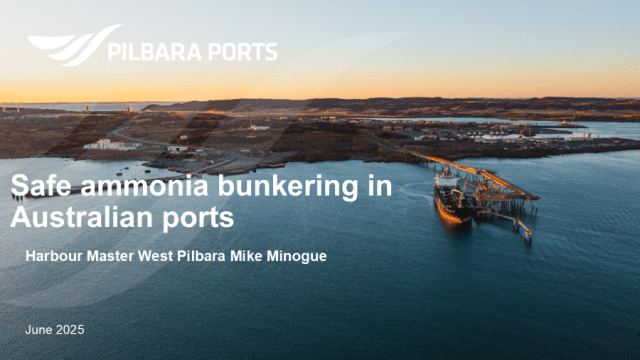
Pilbara Ports and Yara Pilbara will collaborate on government and stakeholder advocacy, developing a training program for safe ammonia handling, and planning of necessary fueling infrastructure at the Ports of Dampier and Port of Port Hedland.

Pilbara Ports and Yara Pilbara will collaborate on government and stakeholder advocacy, developing a training program for safe ammonia handling, and planning of necessary fueling infrastructure at the Ports of Dampier and Port of Port Hedland.

Despite the successes and progress made in 2025, the year remains a missed opportunity for ammonia energy. The first complete supply chains for renewable ammonia are emerging, and some 600,000 tons of annual production capacity is set to be online in northeast China early next year. Maritime engines, cracking, and power & heat technology solutions also made their mark, moving from feasibility into deployment. But disappointing outcomes at the IMO and government support that failed to spark market development remains an issue, with plenty of critical, detail-heavy work ahead of us in 2026.

MOL has become the first shipping line and future fuel customer to join the Pilbara Clean Fuels Bunkering Hub initiative. MOL aims for its under-development, Capesize bulk carrier vessels to be bunkered in the Pilbara by 2030, servicing the iron ore supply corridor between West Australia and East Asia.

A new strategy roadmap launched alongside the recent AEA APAC conference envisions Port Hedland in the Pilbara region as a major clean fuel bunkering hub. In news from roadmap partners, Oceania Maritime Energy and SeaTech Solutions have received approval in principle for their ammonia bunkering vessel design (also at the APAC conference), and BHP has signed time charter contracts for two ammonia dual fuel Newcastlemax bulk carriers to carry iron ore to northeast Asia.
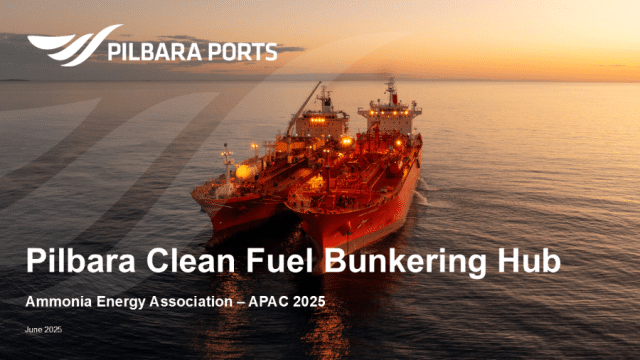
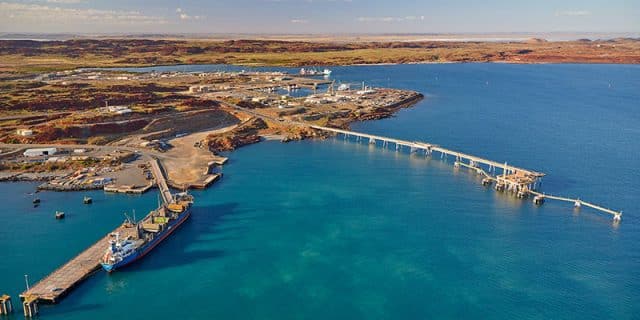
NH3 Clean Energy will collaborate with Woodside to progress the Angel CCS project offshore of the Pilbara in northwestern Australia. Meanwhile, NH3 will work with Oceania Marine Energy and Pilbara Ports to establish an ammonia bunkering service at the Port of Dampier by 2030, targeting iron ore transport between Australia and Asia.
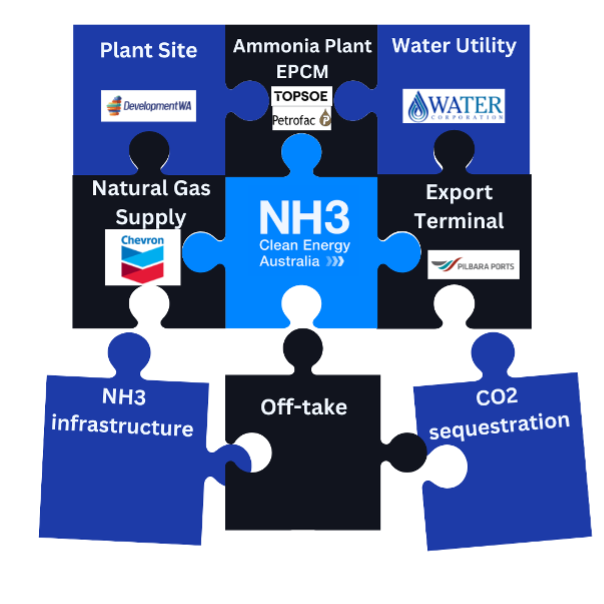
In recent months, project developments include completion of pre-FEED work, as well as partnerships to explore options for the delivery of ammonia to both export and bunkering vessels, long-term gas feedstock supply, and shared carbon dioxide pipeline infrastructure.
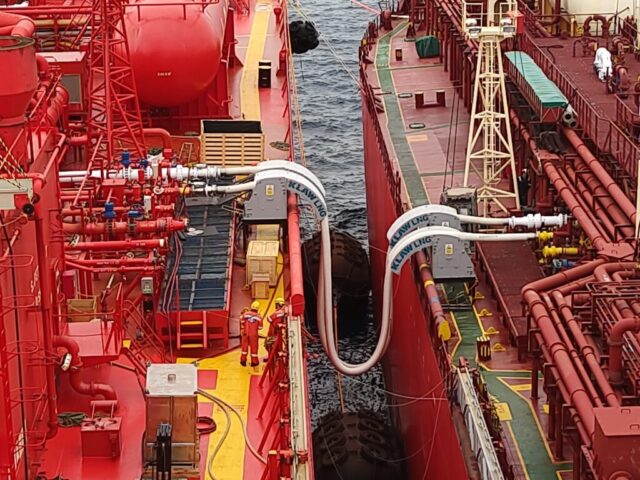
Led by the Global Centre for Maritime Decarbonisation, a consortium has successfully executed a ship-to-ship ammonia transfer in outer anchorage, simulating ammonia bunker fuel operations within a port for the first time.
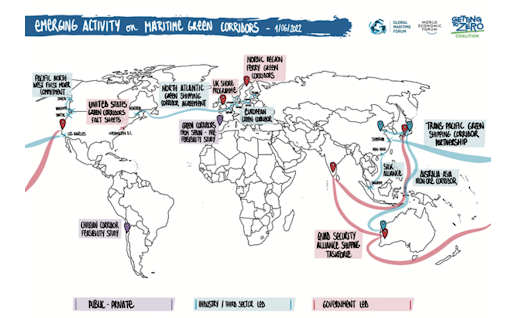
Since the Clydebank Declaration was signed last December, the prospect of ammonia-fueled, green maritime corridors has been steadily rising. The Global Maritime Forum has just released a valuable discussion paper on potential definitions and approaches for green corridors. Recent announcements in Europe, Singapore, Australia and the Nordic countries demonstrate growing momentum. For maritime stakeholders to capture early learnings and best manage the complex task of alternative maritime fuel scale-up, the opportune time is right now.
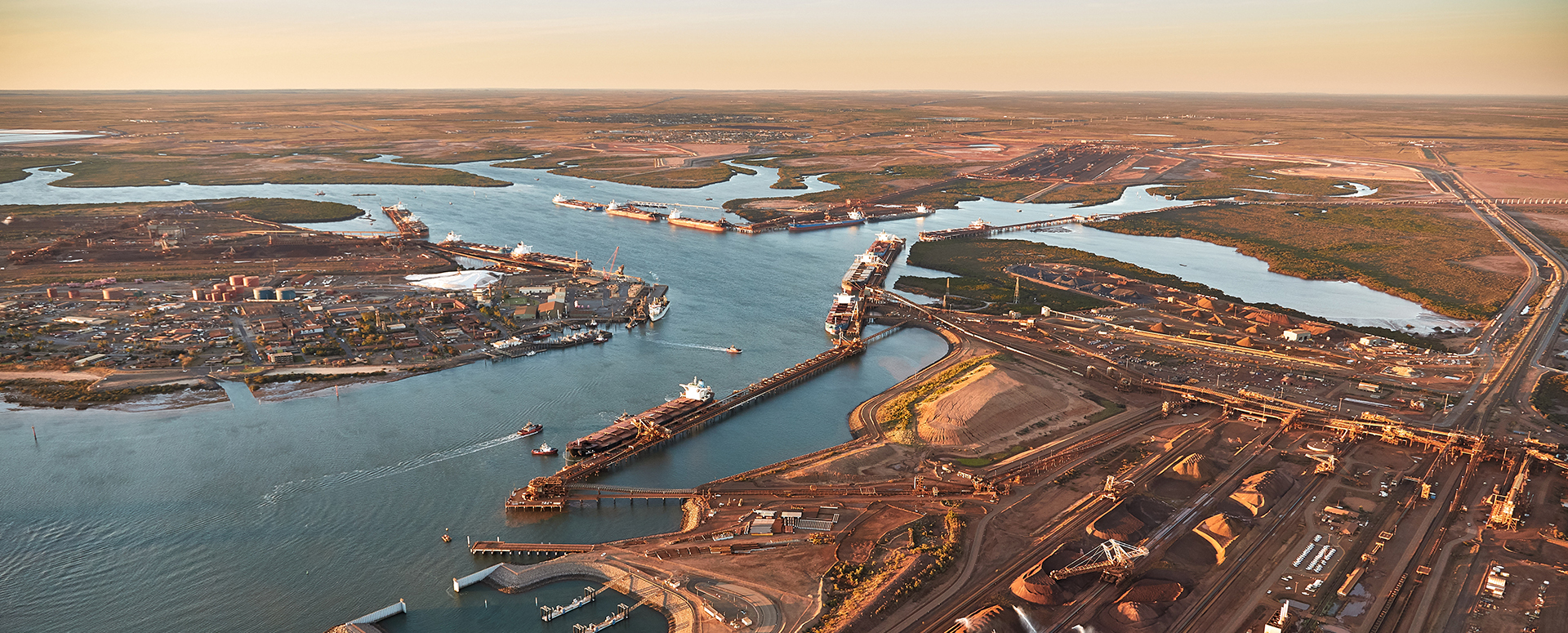
Yara Clean Ammonia and the Pilbara Ports Authority have joined forces to explore the potential for ammonia bunkering in northern Australia. Together, the pair will work through the safety & operational challenges presented by ammonia maritime fuel at PPA’s existing ports network, which includes two of the world’s largest bulk export ports. Tune into the Australia conference next week for more updates from Yara, including Project YURI, future plans in the Pilbara, and how certification work will help unlock seaborne clean ammonia trade around the world.