Site items in: Ammonia Transition

Ammonia Energy Live February - 2021
Article

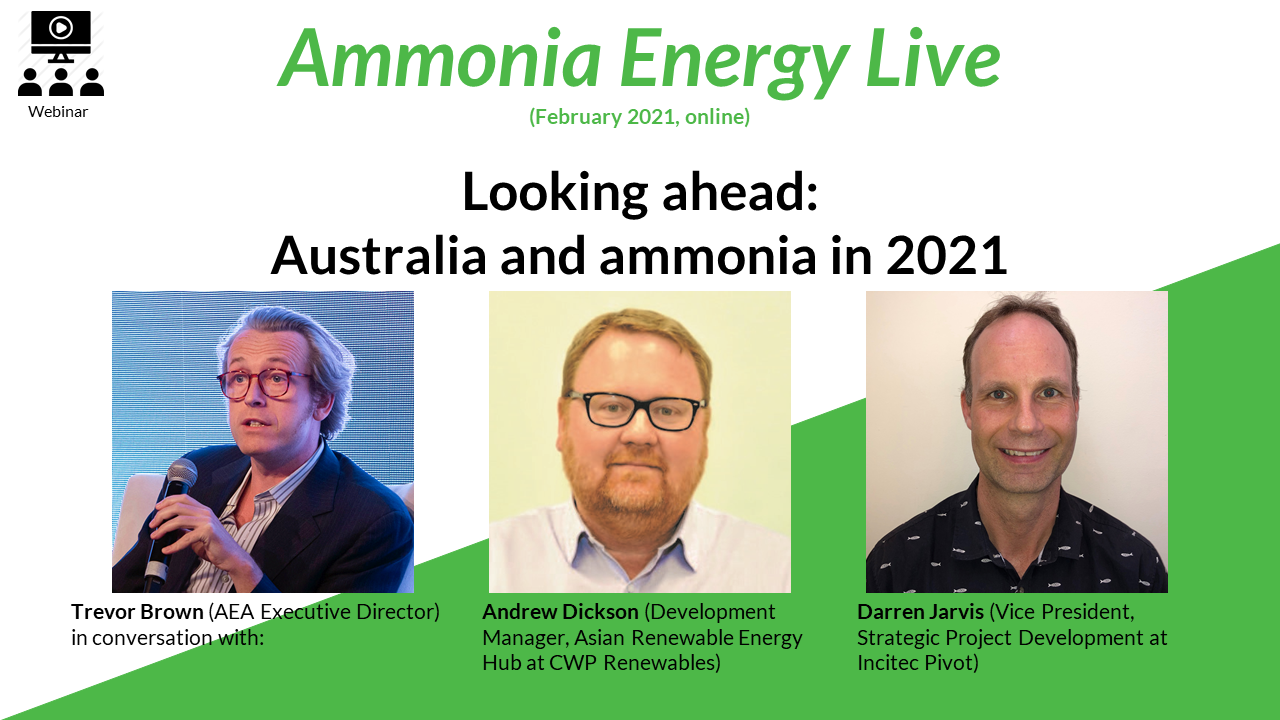
Last week we presented the first episode in our monthly webinar series: Ammonia Energy Live. Every month we’ll explore the wonderful world of ammonia energy and the role it will play in global decarbonisation - with an Australian twist. To kick things off we wanted to set the scene for 2021 and give you a sense of where the ammonia transition is at - key projects, key milestones and things to be excited about going forward. And, since this is an Australian-focused series, we wanted to explore what’s important about Australia to the ongoing work of the AEA.
The Ammonia Transition: panel wrap-up from the Ammonia Energy Conference
Article

What key challenges lie ahead as ammonia producers embark on the transition to low and zero-carbon ammonia? What are the big producers already doing to smooth and later accelerate this transition? On November 19, 2020, the Ammonia Energy Association (AEA) hosted a panel discussion moderated by Steve Crolius from Carbon Neutral Consulting, as well as panel members Sammy van den Broeck from Yara, Ashraf Malik from CF Industries, and Trevor Williams from Nutrien as part of the recent Ammonia Energy Conference.

Ammonia infrastructure: panel wrap-up from the 2020 Ammonia Energy Conference
Article

Infrastructure is key to realising the full potential of ammonia energy, enabling new markets and expanding the existing ones. By 2050 the hydrogen (and by extension, ammonia) market could be 20 times larger than it is today. What future possibilities are there to expand global ammonia production (currently 180 million tonnes per year) or trade volumes across the world’s oceans (currently 18 million tonnes per year)? On November 18, 2020, the Ammonia Energy Association (AEA) hosted a panel discussion moderated by Daniel Morris from KBR, as well as panel members Anthony Teo from DNV GL, Oliver Hatfield from Argus Media, and Michael Goff from Black & Veatch as part of the recent Ammonia Energy Conference. The panel’s insights from a number of different perspectives - market analytics, ship building and operating, as well as pipeline engineering - demonstrated ammonia's potential to become a low- or zero-carbon fuel of choice for the future. Current infrastructure can be adapted, new infrastructure can be built and operated cheaply, and lessons from previous fuel transitions can be taken on board to make the uptake of ammonia energy as smooth as possible.

Start of the Journey - A Carbon Capture Success Story
Presentation

Carbon Capture, Utilization and Storage (CCUS) has proven to be an important and effective step in helping organizations achieve their global climate change goals. This presentation will provide an overview of a strategic success story, highlighting the importance of partnering with key stakeholders, taking a concept and turning it into an operational reality.

The Clean Ammonia Transition @ Yara
Presentation

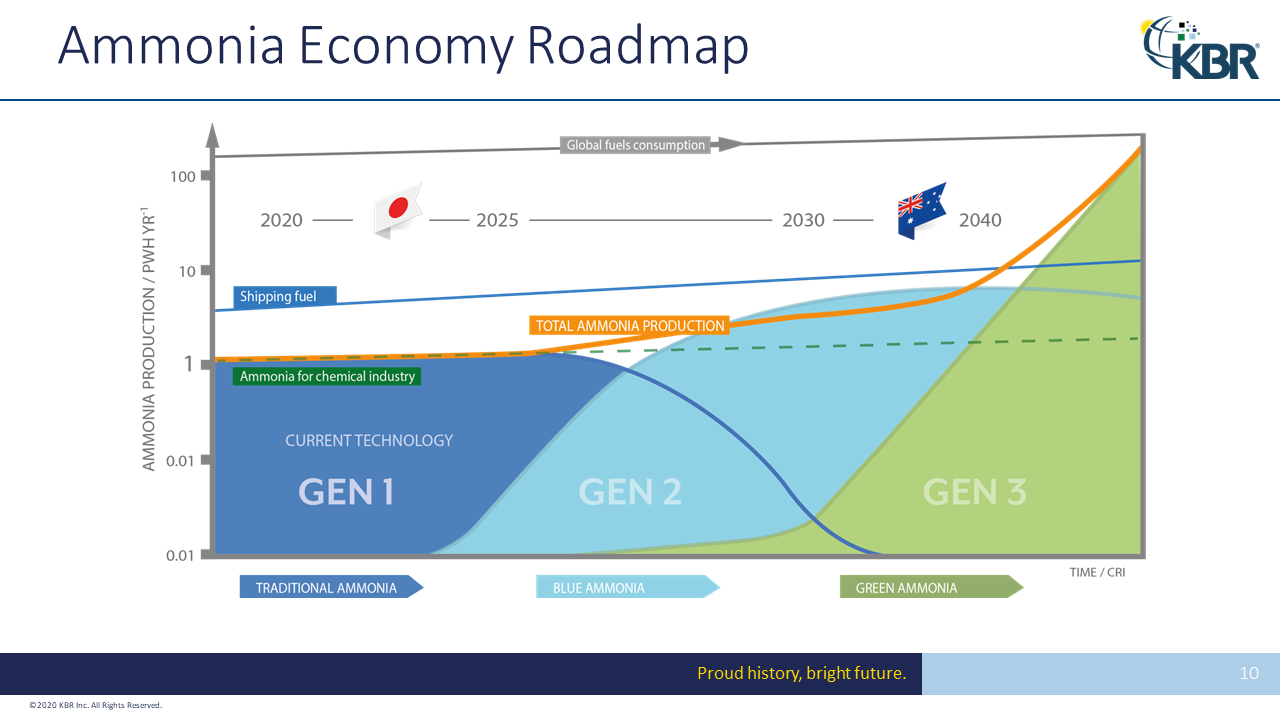
Yara is one of the world’s largest ammonia producers, and the largest trader and shipper of ammonia around the world. We see green ammonia as key molecule to decarbonize the food chains, as well as the ultimate zero-carbon shipping fuel. To provide proof of concept, different large commercial demonstration projects are in the pipeline. The green projects are based on hydro, off-shore wind and solar, while solutions for blue and grey ammonia can be suitable during the transition period. Several framework conditions for success will be discussed.

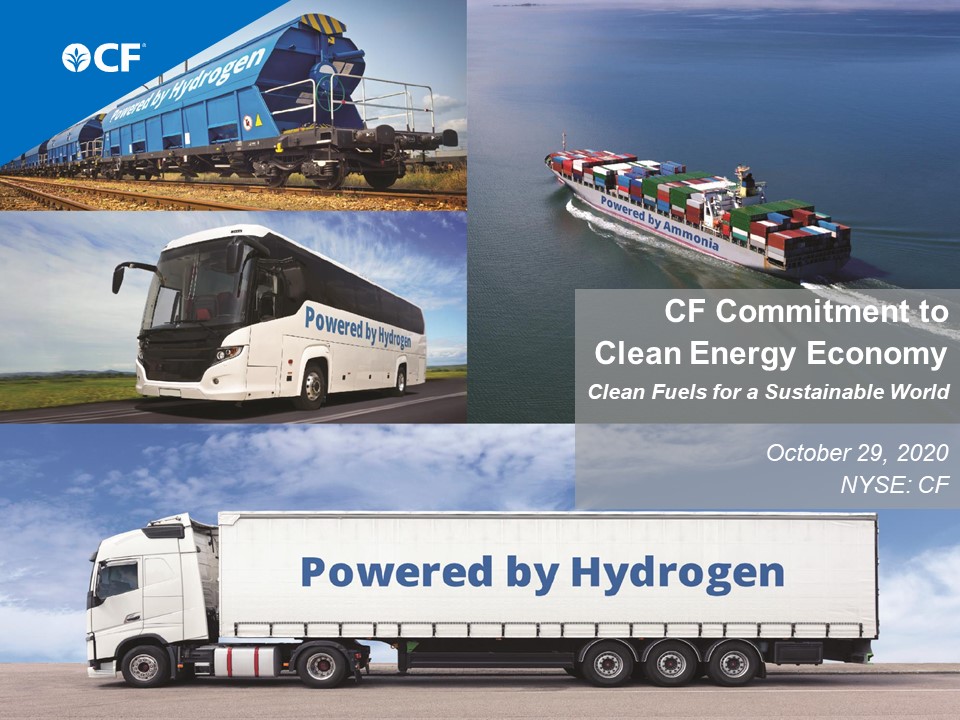
CF’s Commitment to Clean Energy Economy - Clean Fuels for a Sustainable World
Presentation

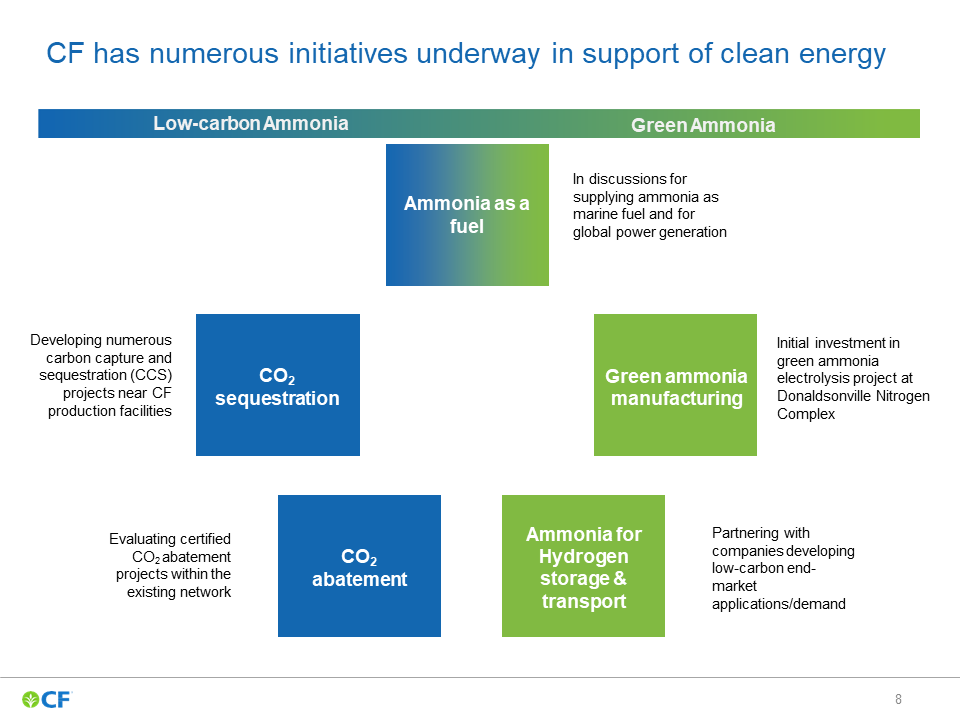
Hydrogen has emerged as a leading clean energy source to help the world achieve net-zero carbon emissions by 2050. Ammonia is one of the most efficient ways to transport and store hydrogen and is also a fuel in its own right. CF is the world’s largest producer of ammonia and is uniquely positioned, with an unparalleled asset base and technical knowledge, to serve this anticipated demand. We are announcing our commitment to decarbonize the world’s largest ammonia production network, positioning CF at forefront of clean hydrogen supply. We have also announced a new green ammonia project at our Donaldsonville Nitrogen…

Keynote Speech: Hydrogen and Ammonia: Building Global Momentum
Presentation

Philibert will speak of the current considerable momentum on hydrogen and the consideration it is given in many countries. Based on a variety of recent reports, including the major IEA Future of Hydrogen report, he will show the evolution of the global thinking on the role of hydrogen in the energy transition from a narrow focus on light-duty fuel-cell vehicles to a much broader spectrum including the chemical and steelmaking industry sub-sectors, long-haul transportation on land, sea and in the air, the power sector, and buildings. Hydrogen is also valued for its potential use as a carrier for clean renewable…

Decarbonized Ammonia for Food and Energy
Presentation

Yara, the Crop nutrition company for the future, established several new business units to sustainably feed the world and protect the planet. Within the segment New Business – Decarbonize Yara – will focus on the main aspects of green house gas emissions in the value chain. Decarbonized ammonia, through the renewable hydrogen route, has several carbon footprint advantages. Fertilizer production will reduce CO2 emissions, the derived nitrate based fertilizer has a lower carbon footprint at field application than other fertilzers and renewable ammonia can be used as an energy carrier (energy storage and (in-)direct fuel). The presentation will cover a…

Ammonia = Hydrogen 2.0 Conference: panel discussion recap
Article

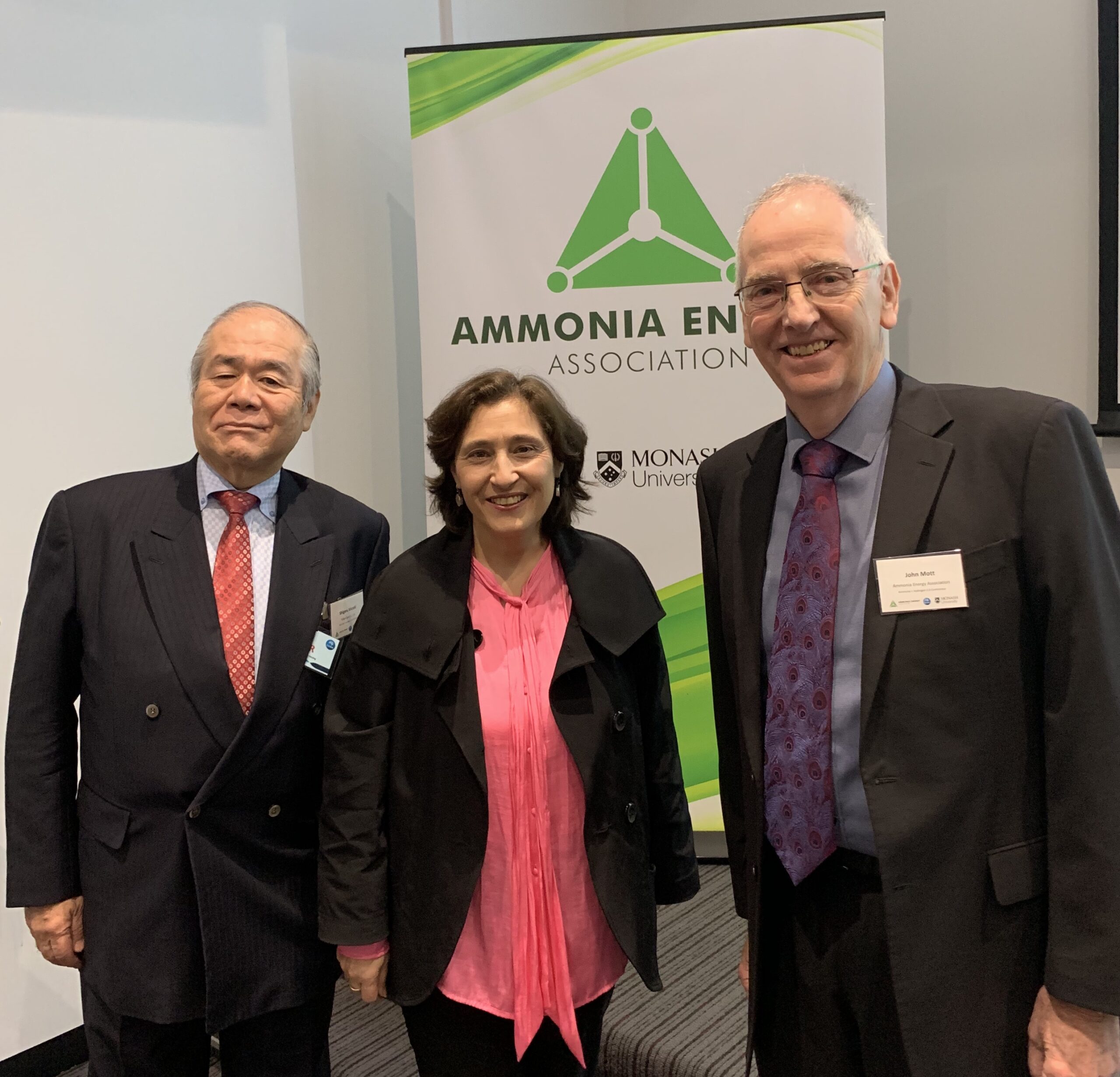
The Ammonia Energy Association Australia’s Ammonia = Hydrogen 2.0 Conference took place on 22-23 August 2019 in Melbourne, Australia. It attracted 115 attendees from industry, government, and research institutions. This is the first of two articles about the event; this article recaps the interactive panel sessions and the second article will highlight selected presentations. The panel discussions were placed at the end of the program so that important themes from the presentations could be highlighted and integrated. These themes included: 1) Building an energy export industry using green ammonia; 2) Green ammonia as a maritime bunker fuel; and 3) Green ammonia as grid scale energy storage – a battery to the nation.