PepsiCo signs three low-carbon fertilizer supply deals
By on May 11, 2026
CF Industries: low-carbon UAN supply in US markets
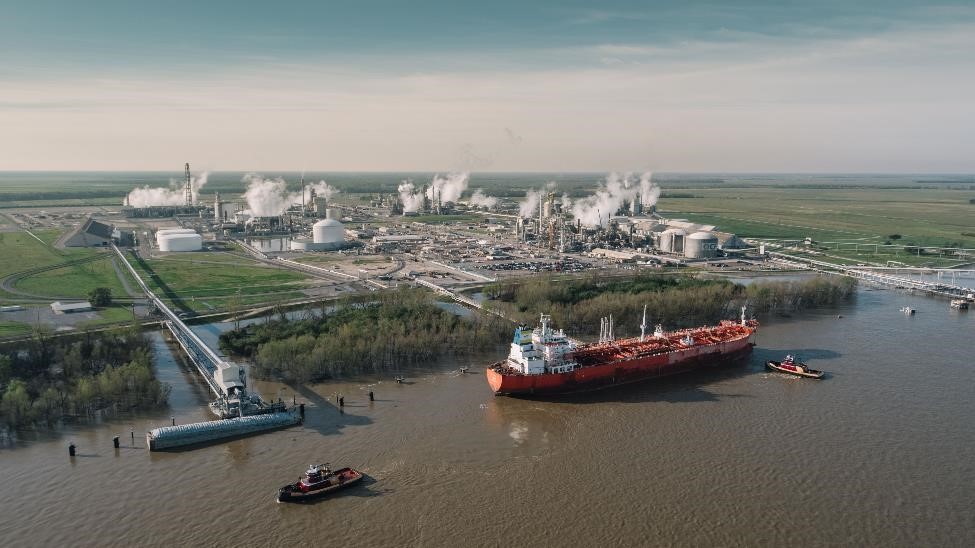
Click to learn more. CF Industries’ Donaldsonville complex where lower-carbon UAN fertilizer will be produced for PepsiCo farmers. Source: CF Industries.
CF Industries and PepsiCo have partnered to decrease the carbon footprint of potato production in the US. In this commercial agreement, CF industries will supply lower-carbon urea ammonium nitrate (UAN) fertilizers to farmers growing potatoes for PepsiCo’s Frito-Lay potato chip range.
At CF Industries’ Donaldsonville facility, lower-carbon UAN is produced using technologies such as carbon capture and sequestration (CCS) and nitric acid plant emissions abatement. The low-carbon status of the UAN is certified by TFI’s Verified Ammonia Carbon Intensity Program.
Our collaboration with PepsiCo reflects growing interest in practical, scalable solutions that substantially reduce emissions from agriculture without impacting farm productivity. Connecting our low-carbon UAN with PepsiCo’s potato supply chain demonstrates that low‑carbon fertilizer solutions are viable today, providing a certifiable and quantifiable way to reduce emissions in the agriculture supply chain.
Erik Mayer, VP, Clean Energy and Business Development, CF Industries, in his organisation’s press release, 23 Apr 2026
At PepsiCo, we are an agriculture company at heart. We’re focused on building a more resilient, low carbon food system, and that starts with the crops at the center of our products. Collaborating with CF Industries to deploy certified low carbon fertilizer across our potato supply chain allows us to reduce emissions while supporting farmers with solutions that fit seamlessly into existing operations.
Burgess Davis, Chief Sustainability Officer, North America, PepsiCo in CF Industries’ press release, 23 Apr 2026
TalusAg: low-carbon ammonia supply across European, African and Asia Pacific markets

Click to learn more. Applying fertilizer from TalusAg’s modular renewable ammonia pilot plant in Boone, Iowa. Source: TalusAg.
A second PepsiCo agreement is for the offtake of 30,000 tons per year of low-carbon ammonia (with the option to purchase a further 41,000 tons) from agriculture technology developer, TalusAg. TalusAg currently has commercial fertilizer pilot plants operational in Boone, Iowa, Nairobi, Kenya, and a planned series of sites in Minnesota, powered by renewable electricity inputs from utility Blue Earth Light & Water.
This initial offtake agreement covers European, Sub Saharan African and Asia Pacific markets.
The collaboration aims to create near-term demand for low-carbon fertilizer by developing market-based mechanisms to build reliable decarbonised ammonia supply chains and logistics. The low-emissions ammonia will be certified by S3 Markets. S3 Markets specialises in Scope 3 decarbonisation, and its lifecycle management system helps producers scale low-carbon commodity output.
Decarbonizing fertilizer is important to advancing climate progress at scale, but it should be done in a way that works for farmers. This agreement helps create a strong demand signal for low emissions ammonia while supporting both more stable input economics for growers and the long-term transition of the fertilizer market.
Margaret Henry, PepsiCo Vice President of Sustainable and Regenerative Agriculture, in her organisation’s press release, 5 May 2026
This global collaboration is a prime example of how credible market-based mechanisms can help build supply chain reliability, lower fertilizer costs for local farmers and accelerate investment in low emissions fertilizer production. With PepsiCo’s leadership, we will work together to help derisk new capacity while supporting more resilient and sustainable food systems.
Hiro Iwanaga CEO, TalusAg in PepsiCo’s press release, 5 May 2026
Fertiberia: renewable fertilizer supply across Europe

Click to learn more. Fertiberia’s Impact Zero production plant in Puertollano, Spain which produces renewable fertilizer. Source: Fertiberia.
In a third agreement, Spain-based Fertiberia will supply 150,000 tons of renewable fertilizer per year by 2030 to PepsiCo. This fertilizer is from Fertiberia’s Impact Zero product line, produced using renewable hydrogen feedstock and features on-the-farm benefits such as slow release formulas and biological inhibitors to limit nutrient loss and improve crop yields.
The amount of fertilizer on order covers approximately 400,000 acres of farmland across Europe to grow key crops such as potatoes, corn, sunflower, sugar beet and rapeseed (which are key ingredients for popular PepsiCo brands like Lay’s, Doritos, Ruffles and Cheetos). The programme will initially launch in France, Romania, Serbia, Greece and Turkey while expanding in Spain and Portugal, with plans to roll-out the initiative to more European countries in the near future.
This partnership builds on a successful pilot collaboration where Fertiberia supplied fertilizer from the same Impact Zero product line to PepsiCo farmers in Spain and Portugal.
Switching to low-carbon fertiliser is one of the strongest levers we have to reduce agricultural emissions, and use of digital technology can complement this journey towards food system transformation. We’re excited by the success of our pilot in Spain and Portugal and look forward to scaling this ambitious partnership across Europe.
Archana Jagannathan, Chief Sustainability Officer, PepsiCo Europe, the Middle East, and Africa in her organisation’s press release, 5 May 2026
Since 2022, we have been developing lower-carbon hydrogen-based fertilisers, powered by cutting-edge technology such as NSAFE, the world’s first bio-inhibitor of nitrification that prevents nitrogen losses and accelerates the transformation of European agriculture. Today, this journey takes on greater meaning thanks to the trust of partners like PepsiCo, with whom we are collaborating to help decarbonise agri-food value chains. This is not just about fertilisers – it’s about demonstrating the importance of collaboration and showing that innovation, when shared, can drive both climate action and food security across Europe.
David Herrero, Chief Operating Officer at Fertiberia in PepsiCo’s press release, 5 May 2026
PepsiCo’s other agreements and overall targets
PepsiCo has signed similar low-carbon ammonia offtake agreements with Yara in Europe (165,000 tons per year) and Latin America (undisclosed volume). Yara will supply its Climate Choice™ fertilizer range to farmers. The range includes lower-carbon ammonia options produced either from renewable hydrogen (supplied by the electrolysis plant in Norway) or with CCS abatement strategies (supplied by the plant in The Netherlands).
The total offtake for low-carbon ammonia fertilizers in recent agreements involving CF Industries, TalusAg, Fertiberia and Yara combined is upwards of 345,000 tons per year, which will account for approximately 50% of PepsiCo’s fertilizer usage by 2030.